CRM & Pipeline · Real Estate
CRM & Pipeline for Real Estate.
Clarity on what's in your pipeline and what's moving, without a 40-page report.
Live · NovraScale build
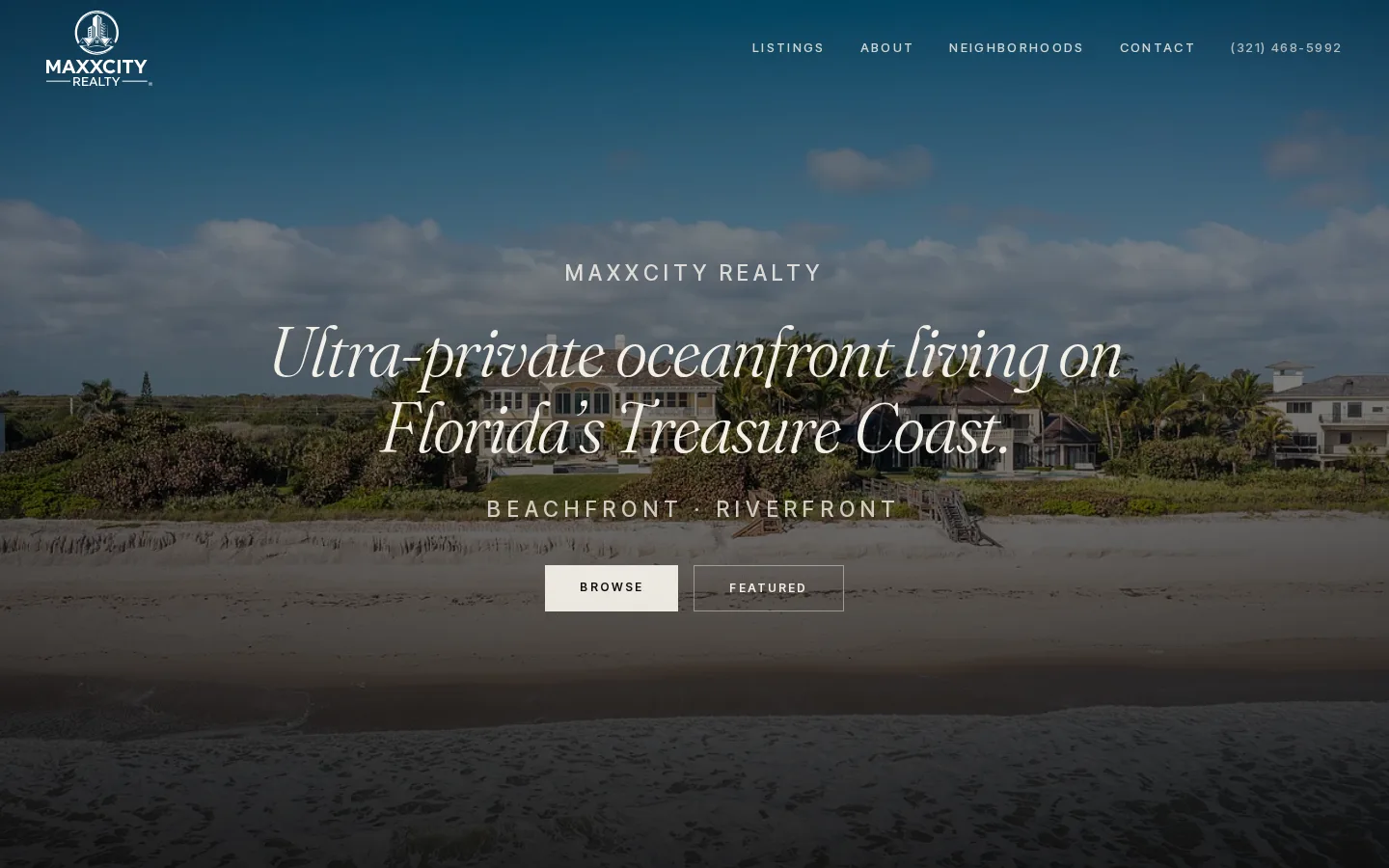
MaxxCity Realty
Real estate brokerage · FL
0.9sFirst paint
100A11Y
100BP
100SEO
The reality
Why this matters for real estate.
Most brokerages run on shared inboxes, sticky notes, and memory, which is why warm buyers get forgotten and stale sellers get called twice by two different agents. A real pipeline tracks every buyer inquiry, showing request, valuation lead, and open listing from first touch to closed transaction, in a view every agent on the team can see. The system MaxxCity Realty runs today captures buyer and seller intake separately, tags neighborhoods, and keeps the next-touch date visible so nothing rots.
What we fix
The crm & pipeline problems specific to real estate.
Two extra transactions a year pays for a website many times over. But most real estate sites fall into one of two traps. Brokerages inherit a WordPress build weighed down by plugins and a bloated MLS widget. Individual listings, even at the top of the price sheet, get pinned to a generic slug page on a brokerage template that flattens every property into the same conversation. Buyers and sellers move on to the name whose site does the work.
No proof you actually close deals
Buyers and sellers want evidence. If your site does not show recently sold work, days-on-market, and real property stories, you lose to the site that does. This is the single biggest trust gap in the category, and it is bigger at the top of the price sheet than it is at the bottom.
A template that carries compliance liability across every agent it serves
Stock real estate templates ship the same headshots, neighborhood descriptions, and marketing language across every agent on the platform. One steering-language slip in the template is a Fair Housing exposure replicated across every user of it. And most brokerages inherit that exposure from an IDX or MLS-provided template without ever reviewing it. Fair Housing violations are not only a ranking penalty. They are a legal-risk vector your brokerage did not consciously accept.
A trophy listing pinned to a generic brokerage slug page
A $5M or $20M home gets the same detail-page template as an entry-level condo. Photo grid, brokerage nav, the same booking widget every other listing uses. At that price tier, the presentation is the pitch. And the pitch is not being made.
Every lost minute after inquiry is a lost deal
Buyers and sellers who reach out expect a response inside the hour. If your intake drops an email into a shared inbox and waits for the agent on duty to see it in the morning, they have already called the next agent on the search results page. In this category, response speed is the sales pitch.
What you get
The crm & pipeline system, built for your clients.
Lead Pipeline
Every inquiry lands in a stage. You see what's new, what's quoted, what's booked, and what's closed. No leads forgotten.
Quote & Job Tracking
Quotes are tracked from sent to accepted. Jobs are tracked from booked to invoiced. Nothing slips between the cracks.
One-Page Reporting
Monthly summary: inquiries this month, where they came from, what closed, what's open, what we're moving next. No jargon, no fluff.
Live Dashboard
Real-time access to your numbers any time you want. Not a report you wait a month for. A window you can open right now.
Our real estate work
Real Estate sites, built by us. Live and earning their keep.
Sites we built and currently manage for real estate. Not demos — actual businesses running on them today.
FAQ
Questions real estate ask.
Real estate website design runs $997 to $2,997/mo on a 12-month commitment, with no separate build fee and a one-time activation equal to one month. We publish three tiers: Starter ($997/mo) is the core system for a solo agent or small team without IDX or vanity-domain listings. Signature ($1,297/mo, full management) is the recommended standard for most brokerages: editorial neighborhood pages, curated listing showcase, dual buyer/seller intake, Fair Housing + ADA + state-advertising review, ongoing management. Platinum ($2,997/mo) is for businesses whose system connects to an outside data source, or that run more than three locations. Standalone single-listing vanity-domain sites for trophy listings are scoped per listing for brokerages under management, not sold off a rate card. For comparison, the rest of the market quotes a build separately from a monthly retainer, and the largest luxury-focused firms quote only after a sales call, so ask any vendor for an all-in year-one number in writing. Full breakdown at /pricing.
Not every real estate site needs IDX. A brokerage running curated listings, editorial neighborhood pages, and strong local SEO often converts better without a search box on the homepage. Buyers land on the neighborhood, not a filter. When IDX is the right call, we integrate iHomefinder, IDX Broker, Realtyna, or a direct RESO Web API feed on your own domain (not a subdomain), so the SEO stays with you.
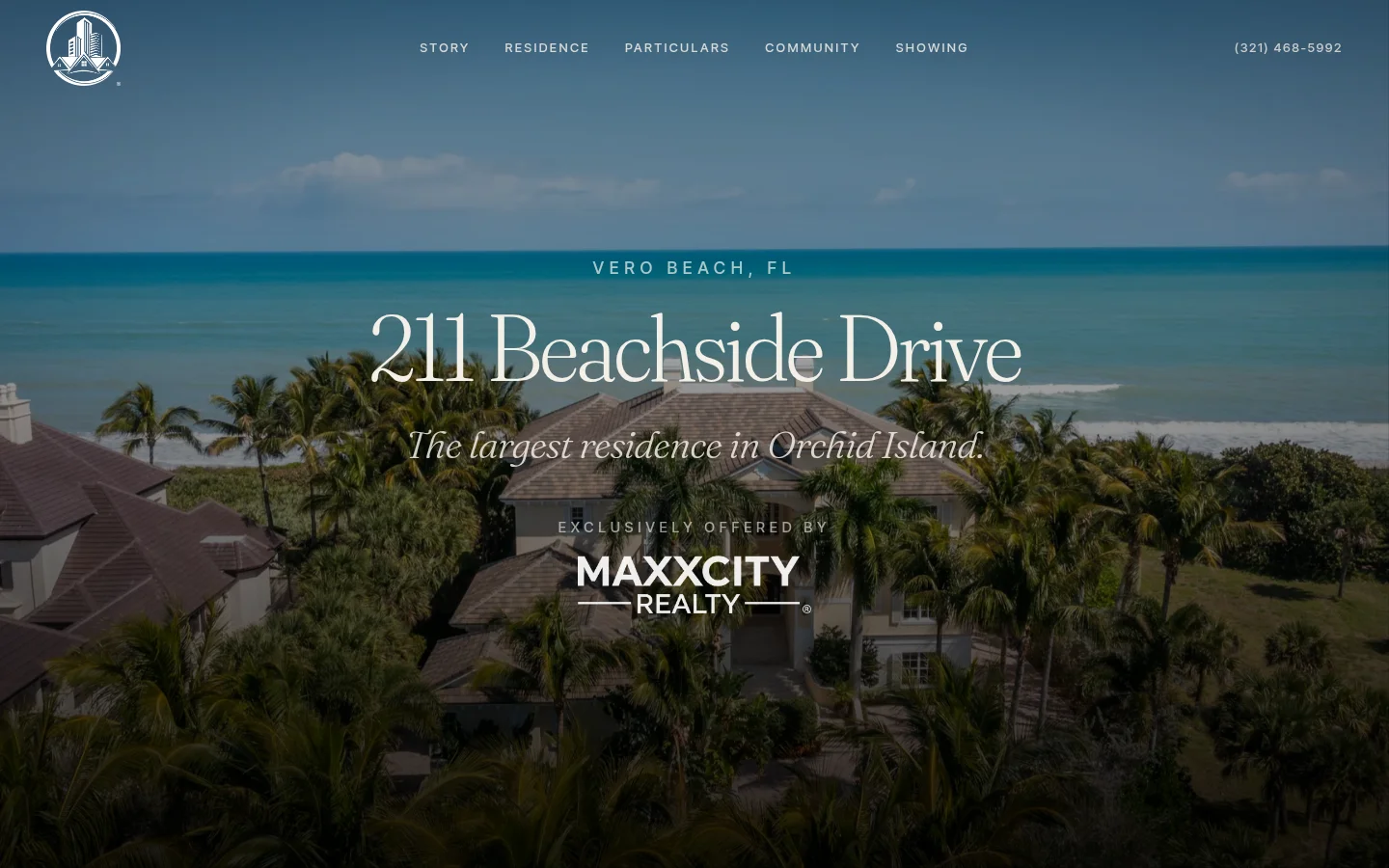
Yes. Each luxury listing that warrants its own presentation gets a standalone site on its own vanity domain: editorial photography, brochure-grade specifications, ambient hero film, showing-request form. The site is independent, but it is plumbed back into the brokerage: shared photo CDN, central showing inbox, and a 301 from the brokerage's listing slug to the vanity URL. 211 Beachside Drive at Orchid Island is a current example.
Listings have a window. The vanity-domain build is a compressed scope (hero film, chaptered photography, brochure-grade specs, showing-request form, brokerage-inbox integration), and we design the process around your marketing calendar. Once photography is delivered and the base draft is approved, the site can go live inside the same listing week for most trophy properties, coordinated with your MLS entry and print collateral. The 90-day timeline in our guarantee is the outside window for a full brokerage engagement, not a single-listing site.
See more on the Real Estate page or the full FAQ.
More for real estate
Other parts of the system we build for real estate.
CRM & Pipeline elsewhere
We also build crm & pipeline for these industries.
- CRM & Pipeline for Accounting
- CRM & Pipeline for Auto Detailing
- CRM & Pipeline for Auto Services
- CRM & Pipeline for Bookkeeping
- CRM & Pipeline for Chiropractic
- CRM & Pipeline for Dental
- CRM & Pipeline for Electrical
- CRM & Pipeline for Financial Advisors
- CRM & Pipeline for Home Services
- CRM & Pipeline for HVAC
- CRM & Pipeline for Law Firms
- CRM & Pipeline for Marketing Agencies
- CRM & Pipeline for Med Spa
- CRM & Pipeline for Mental Health
- CRM & Pipeline for Pest Control
- CRM & Pipeline for Plumbing
- CRM & Pipeline for Roofing
- CRM & Pipeline for Salons
- CRM & Pipeline for Veterinary
This page covers crm & pipeline as we build it for real estate. For how the capability works on its own, across every industry we serve, see crm & pipeline.
Free Website Report Card
Your website is leaving money on the table. Find out exactly where.
Enter your URL. We’ll scan it right now. Results land in your inbox in minutes.
- Your site’s letter grade and overall score out of 100
- We check four things: Speed, Google Visibility, Trust & Security, Mobile Experience
- The exact issues costing you customers — worst ones first
Website Report CardD+
0/ 100
Performance28
SEO42
Security65
Mobile35
Page load: 6.2s (target < 2.5s)
Missing meta descriptions on 4 pages
SSL certificate valid